Is the dating pool really smaller in your 40s?
Not by headcount. In 2019, more people ages 40 to 54 were unpartnered than a generation earlier. What changes is how they're spread out and how you're searching. Often the pool is fine and the filter needs a look.
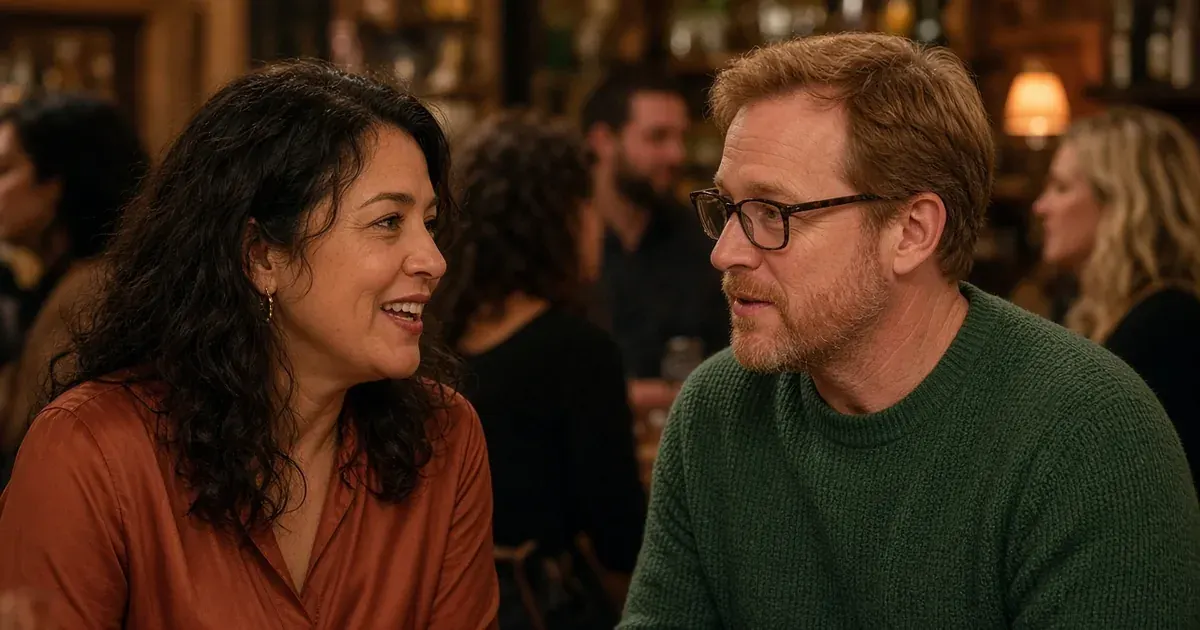
The pool isn’t empty. In 2019, about three in ten U.S. adults ages 40 to 54 were neither married nor living with a partner, up from about a quarter in 1990.1 That’s millions of people without a partner, though not all of them are looking. So why does it feel like there’s no one?
How many people in their 40s are single?
More than you might think, and more than a generation ago.
In a 2021 analysis of 2019 census data, Pew Research Center found that 31% of adults ages 40 to 54 were unpartnered in 2019, compared with 24% in 1990.1 Across all adults 25 to 54, men were slightly more likely to be unpartnered than women, 39% to 36%.1
A 2023 Pew analysis of 2021 data found that a record 25% of 40-year-olds had never been married, compared with just 6% in 1980.2 And in 2022, most never-married people in their early 40s weren’t living with a partner either.2
So the people are out there. The question is why they feel so far away.
Why does it feel so small?
A few things can make it feel smaller, and they’re more about where people are than how many there are:
- People are busier. Work, kids, aging parents. In interviews with Australians in their 30s and 40s, people described thin dating markets tied to time pressure and less access to nights out.3
- Friend circles thin out. The same interviews pointed to friendship networks that shrink and overlap in mid-life, so fewer new people arrive through friends.3
- Every must-have narrows the pool. Knowing what works for you is healthy. Several must-haves together narrow it a lot.
Here’s the honest part: some of that is the pool, and some of it is the filter. It helps to know which is which.
What can you actually change?
Nadia, 44, was sure there was no one in her city. When she wrote out her requirements, there were eleven of them. Three were real deal-breakers: she didn’t want more kids, she needed someone who didn’t drink heavily, and she wanted someone kind to waiters. The rest were habits: an age range she’d never questioned, a height minimum, “has a job like mine.”
She kept the three and loosened the rest. Within a couple of months she’d been on more second dates than in the year before.
That isn’t settling. If you’re worried it is, our piece on whether you’d be settling draws the line clearly. And if you’ve never been married and feel like that counts against you, never married at 40 is worth a read.
You can also widen where you look. Online is now the most common way U.S. couples meet, but friends are still a major route.4 We collected some ways to meet people in your 40s without apps.
What these numbers can’t tell you
- The Pew figures count everyone without a partner, including people who aren’t looking.12
- They’re national figures from 2019 to 2022. Your city, your community and your social circle can look very different.
- The interview study is a small qualitative sample from Australia.3
- The how-couples-meet data cover U.S. couples of all ages, not people in their 40s specifically.4
- Nadia is an illustrative character, not a real person.
Try it
Is it the pool, or the filter? Sort each complaint.
People who talk about this
- Credentialed source
Bella DePaulo
Research and writing on single life, including people who choose to stay single and live full lives on their own terms.
- Credentialed source
Lori Gottlieb
What happens in the therapy room, including breakups, dating choices and the stories people tell about love.
- Credentialed source
Marisa G. Franco
Friendship, loneliness and belonging, and how adults make and keep close friends.
- Credentialed source
Pepper Schwartz
Research and writing on love, sex and relationships, including dating and partnership later in life.
Further reading
Pew Research Center, 2020
A profile of single Americans (opens pewresearch.org)Shows who is single in the US, how many are not looking to date, and the reasons they give.
NPR (Life Kit)
There's pressure to be partnered. Here's how to enjoy single life (opens npr.org)A grounded conversation about pushing back on the pressure to pair up and building a satisfying single life.
Sources
- Rising Share of U.S. Adults Are Living Without a Spouse or Partner
- A record-high share of 40-year-olds in the U.S. have never been married
- Navigating 'thin' dating markets: Mid-life repartnering in the era of dating apps and websites
- Disintermediating your friends: How online dating in the United States displaces other ways of meeting