Spending the holidays alone in your 40s, without the shame
Maybe you chose a quiet Christmas. Maybe the kids are at their other parent's this year, or the family math just didn't work. Either way, being alone on a holiday is not the same as being lonely, and research on solitude shows how to keep it on the right side of that line.
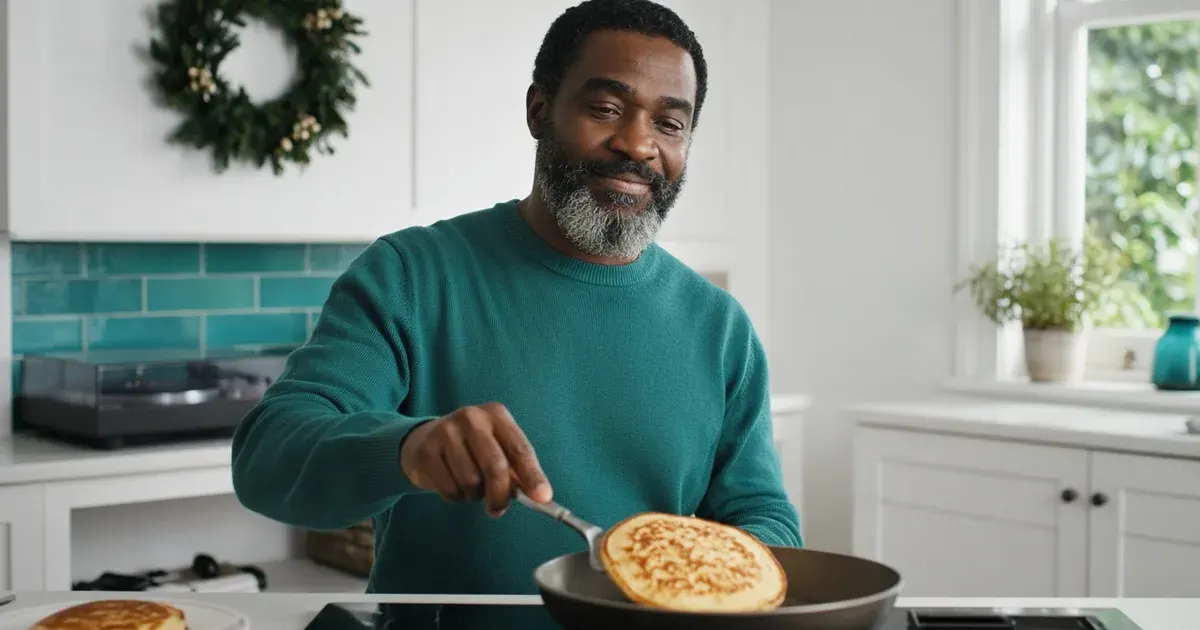
Being alone on a holiday isn’t the same as being lonely, and it isn’t something to be embarrassed about. Research on solitude finds that time alone tends to calm people down, and that the biggest difference between restful alone and lonely alone is whether some of it feels chosen. So the goal for this year isn’t to fill every hour. It’s to make enough of the day yours that the quiet works for you.
Is it sad to spend Christmas alone in your 40s?
Only if you accept the script. Hollis is 46, a project manager, divorced six years with no kids. This year his siblings are spread across three states, the flights were absurd, and he decided to stay home. He’s genuinely looking forward to it. What he’s dreading is the pity: the “oh no” from a coworker, the text from his aunt that says “thinking of you” like it’s a funeral.
That pity comes from a cultural assumption that coupled people are happier and single people must be missing something. Researchers who study single life call it singlism, and they argue the actual differences in well-being by marital status are small.1 You’re allowed to like your own company on a day that’s built for crowds.
You’re also not unusual for finding the season hard. In a national poll, 38% of adults said missing family or loved ones makes the holidays stressful, and 72% agreed the season can feel bittersweet.2 Bittersweet is normal. It’s not a diagnosis.
What does solitude actually do to your mood?
It turns the volume down. In a set of four studies, time alone reduced high-energy feelings, both the good kind (excitement) and the bad kind (anxiety, irritation). When people actively chose to be alone, it led to relaxation and lower stress.3
A three-week diary study adds the important nuance. On days people spent more hours alone, they felt somewhat lonelier and less satisfied. But that effect shrank or disappeared when the time alone was chosen. More alone time also went with less stress and more sense of freedom, and there was no single ideal balance that worked for everyone.4
When adults described what time alone gives them, the themes that mattered most were autonomy and a break from pressure, and they mattered more with age.5 In your 40s, after years of meetings, caregiving or co-parenting, a day with nobody needing anything from you can be the point, not the problem.
If it chose you, how do you keep it from tipping into lonely?
This is where the “chosen” part matters. If the kids are with their other parent, or a relationship ended this year, or family is complicated, the day might not feel like your choice. You can still make parts of it your choice.
- Choose the hours. Decide in advance what you’ll do from 10 to noon, and what you’ll do from 4 to 6. Those are the stretches that tend to sag.
- Put people in the middle of the day, not just the beginning. A call at 4 p.m. breaks the long afternoon better than a text at 9 a.m.
- Get out once. A walk, a movie, a diner, a volunteer shift. You want one moment where you’re among other people, even strangers.
- Watch the isolating. In that same poll, about one in five stressed adults said they cope by isolating themselves.2 Quiet is fine. Disappearing from everyone for a week is a signal to reach out.
An hour-by-hour plan for the day
Morning: sleep in with no alarm. Make the breakfast you’d make for a guest. Phone stays in another room until 10.
Late morning: get outside. A long walk with a podcast, a hike, a swim at a gym that’s open.
Midday: the meal. Cook something you love, or order from somewhere you’ve been meaning to try. Set the table anyway.
Afternoon (the sag): your scheduled call. Then a movie in an actual theater, a long bath, or a project you enjoy.
Evening: something cozy and specific: the book you’ve been saving, a series finale, a fire. Before bed, write down one good moment from the day.
When is it more than a hard day?
If the low feeling sticks around for weeks after the holidays, or you notice sleep, appetite or work slipping, that’s worth taking to your doctor or a licensed therapist. Plenty of people in their 40s get through a rough season with a few sessions of support. You don’t have to wait until it’s bad.
What doesn’t the research show?
- The solitude studies measured everyday time alone, not holidays specifically.
- The diary study found loneliness rose on high-solitude days on average, even though choice softened it. Alone time isn’t automatically good; it depends on the person and the day.
- The singlism work is a review and argument, not a measurement of how your family or coworkers see you.
Try it
Which kind of alone is this year?
Steal this text
Say it in your own words, or start from these
When a coworker says 'oh no, alone on Christmas?'
Honestly, I'm looking forward to it. Long walk, good food, no driving. I'll tell you how it went.
To a friend, so the day has a check-in
Can we do a call around 4 on the 25th? I'm having a quiet one and would love to hear your voice in the middle of it.
To a family member who keeps inviting you
I love that you asked. This year I'm staying home, and I'd like to come see you the weekend after.
Someone you love spending this one alone?
Send them the card, maybe with a plan to call. It tells them they're on someone's mind.
Nothing you type here is saved or sent anywhere unless you send it yourself.
People who talk about this
- Credentialed source
Bella DePaulo
Research and writing on single life, including people who choose to stay single and live full lives on their own terms.
- Credentialed source
Lori Gottlieb
What happens in the therapy room, including breakups, dating choices and the stories people tell about love.
- Credentialed source
Marisa G. Franco
Friendship, loneliness and belonging, and how adults make and keep close friends.
- Credentialed source
Pepper Schwartz
Research and writing on love, sex and relationships, including dating and partnership later in life.
Further reading
Greater Good Science Center, UC Berkeley
One Key to Being Happy When You're Single (opens greatergood.berkeley.edu)Research on how social activity shapes happiness for single people, sometimes more than for married people.
Sources
- Singles in Society and in Science
- Even a joyous holiday season can cause stress for most Americans
- Solitude as an Approach to Affective Self-Regulation
- Balance between solitude and socializing: everyday solitude time both benefits and harms well-being
- What Time Alone Offers: Narratives of Solitude From Adolescence to Older Adulthood